
Blepharoplasty: Understanding Eyelid Surgery and Its Benefits
The eyes play an important role in facial expression, and changes around them can affect the overall appearance of the face. Excess eyelid skin, puffiness, and under-eye bags may become more noticeable with age or due to genetics. Blepharoplasty is a cosmetic surgical procedure designed to address selected changes around the eyelids. People interested in professional aesthetic care can explore available options with Coolaser Clinic, where treatment recommendations can be tailored to individual concerns and goals.
Why the Eye Area Attracts Attention
The skin around the eyes is particularly delicate and can show visible changes over time. Unlike some other areas of the face, the eyelids have relatively thin skin and complex underlying structures.
As facial tissues naturally change, the upper eyelids may develop excess skin, while the lower eyelids can become more affected by puffiness or prominent fatty tissue.
These changes do not necessarily indicate poor skin care. They can be a normal part of aging and may also be strongly influenced by genetics.
What Is Blepharoplasty?
Blepharoplasty is a surgical procedure involving the upper eyelids, lower eyelids, or both. Depending on the patient’s anatomy and concerns, the procedure may involve removing or repositioning excess skin and fatty tissue.
The purpose is generally to improve the contour and appearance of the eyelid area while maintaining natural facial proportions.
Because eyelid anatomy varies considerably between individuals, treatment should be planned specifically for each patient rather than based on a standard template.
Common Reasons People Explore the Procedure
People may begin researching eyelid surgery after noticing changes that are difficult to address with regular skin care alone.
Common concerns include:
- Excess skin on the upper eyelids
- A heavier-looking upper eye area
- Puffiness beneath the eyes
- Prominent under-eye bags
- Changes in eyelid contours
- An appearance that seems consistently tired
In some cases, excess upper-eyelid skin can also affect peripheral vision. When this occurs, an appropriate medical assessment is particularly important.
Upper Eyelid Blepharoplasty
The upper eyelids can gradually develop loose skin that changes the natural eyelid fold. For some people, this creates a heavier appearance around the eyes.
During upper eyelid surgery, an incision is commonly placed within the natural crease. The surgeon can then address an appropriate amount of excess tissue while taking the patient’s individual anatomy into account.
Careful planning is important because removing too much tissue can affect both appearance and eyelid function. The goal is generally to create a balanced result rather than dramatically alter the eyes.
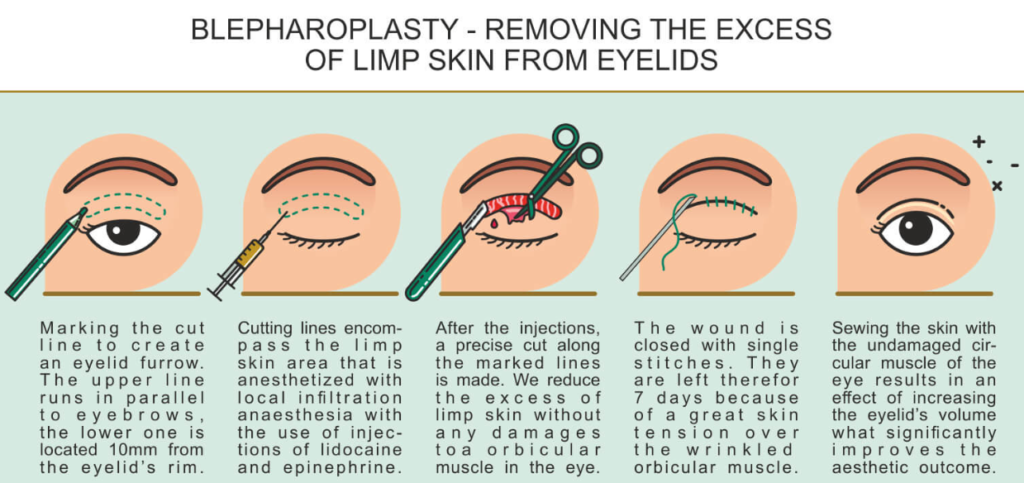
Lower Eyelid Blepharoplasty
The lower eyelids can develop bags or puffiness as the supporting tissues and fat distribution change over time.
Lower eyelid blepharoplasty can involve different techniques depending on the patient’s anatomy. Some approaches focus on repositioning or reducing fatty tissue, while others may also address excess skin.
The appropriate technique should be determined during an individual examination. Different causes of under-eye changes can require different treatment strategies.
What Happens During the Consultation?
A consultation is one of the most important steps before considering eyelid surgery.
During the appointment, a qualified professional can evaluate the eyelid area and discuss the patient’s concerns. Medical history, eye health, previous procedures, medications, and individual expectations may also be relevant.
Patients should feel comfortable asking questions about the procedure, including:
- Which area needs treatment?
- What technique is recommended?
- Where will incisions be placed?
- What should recovery involve?
- What results are realistic?
- What potential risks should be considered?
- Are there non-surgical alternatives?
A detailed discussion helps establish realistic expectations before treatment.
Preparing for Recovery
Recovery after eyelid surgery varies from person to person. The extent of the procedure, individual healing, and the specific surgical technique can all affect the recovery experience.
Swelling and bruising are common during the early stages. Patients may receive instructions concerning rest, physical activity, eye care, and protecting the treated area.
Following postoperative instructions carefully is important. Patients should also avoid comparing their early recovery with photographs of other people’s results because healing can look very different from one individual to another.
Caring for the Eye Area Long Term
Good eye-area care remains useful after recovery. Although cosmetic surgery can address selected structural changes, it does not stop the natural aging process.
Sun protection is particularly important because ultraviolet exposure can contribute to premature skin aging. Gentle skin care and appropriate hydration can also support the overall condition of the surrounding skin.
People who have undergone surgery should follow their specialist’s recommendations regarding when to resume their normal skin care routine.
Surgical and Non-Surgical Treatments
Blepharoplasty is only one option within modern aesthetic care. Some concerns around the eyes relate primarily to skin texture, pigmentation, or fine lines and may be approached with non-surgical treatments.
However, non-surgical procedures cannot necessarily correct significant excess eyelid skin or structural changes.
For this reason, an assessment can be useful for determining whether the concern is primarily related to the skin surface or underlying eyelid anatomy.
Understanding Realistic Results
Aesthetic procedures should be approached with realistic expectations. Blepharoplasty can address specific eyelid concerns, but it cannot prevent future changes caused by aging.
The final appearance depends on many factors, including anatomy, skin quality, healing, surgical technique, and the amount of tissue addressed.
Rather than focusing on achieving a completely different appearance, patients may prefer to discuss subtle improvements that preserve their natural facial character.
Final Thoughts
Blepharoplasty can be an option for people concerned about excess eyelid skin, under-eye puffiness, or other age-related changes around the eyes. Because the eyelid area is delicate and structurally complex, careful assessment and individualized treatment planning are essential.
Anyone considering the procedure should discuss their goals, medical history, expected recovery, potential risks, and available alternatives with a qualified professional. Taking an informed approach can help make aesthetic treatment a more considered part of a broader self-care routine.